
Non-Capitalist Development
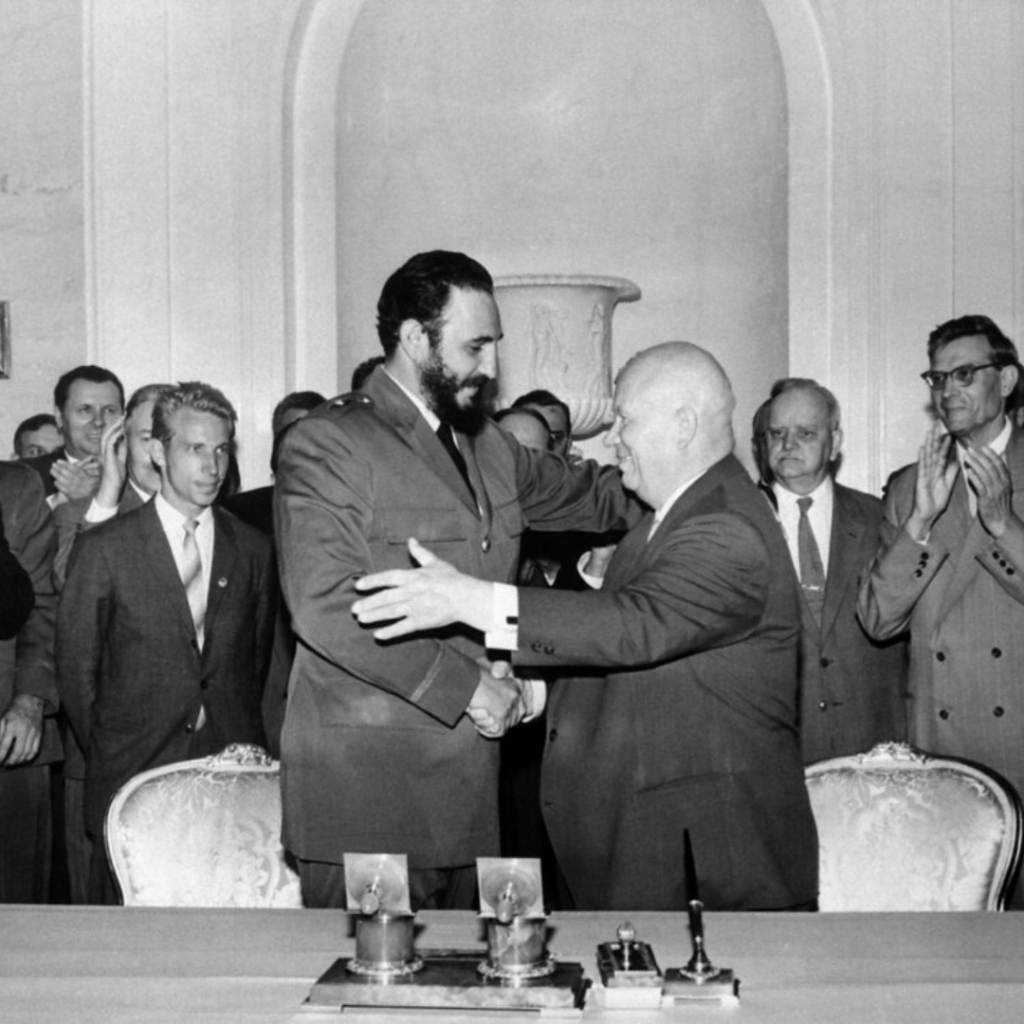
By DCC Team Non-capitalist development was a strategy promoted by the Soviet Union during the Cold War as an alternative path for newly independent nations to modernise without fully embracing capitalism or immediately transitioning to socialism. Rather than supporting revolutionary movements from below, the Soviet Union placed its faith in the leadership of states, focusing […]
Photography and Colonialism

By Shikha Photographs are often seen as representing reality; especially historical photographs are thought of as authentic glimpses of the past. James Borchert, writing in the 1980s, challenged the objectivity of photographs and highlighted the significance of analysing them within the context of their subjectivities and the larger socio-political and cultural systems in which they […]
Development Displacement

By Phillip Cole Forced displacement happens when people have to leave their homes against their will and move to another area to be safe from harm, or are forcibly driven or moved from their homes. Although most people think of forcibly displaced people as refugees fleeing political violence, they in fact make up a small […]
Global Health

By Ramisha Global health is generally defined as a research, practise or study which aims to improve health and reach equity for all people worldwide. However, global health is distinct from other disciplines of health science or public health dealing with health issues on a global scale [and to] utilise research systems, knowledge bases and […]
Kanaky

By Angelique Stastny The term “Kanak” refers to the Indigenous people of the Pacific territory commonly known as New Caledonia, located about 2,000 km off Australia’s East Coast. “Kanaky” is the name that Kanak people use to refer to their territory. The name is also used by pro-independence people and, more broadly, by people who […]
Settler colonialism

By Angelique Stastny Settler colonialism is a distinct form of colonialism. In settler colonial societies, settlers come to stay and impose their sovereignties and lifestyles. It puts in place a long-lasting oppressive structure that seeks to erase Indigenous governance, economies and knowledge systems. Settler colonialism is different from exploitation colonialism in that it involves a […]
The Bandung Conference

By Selena Cai In the decade after World War II, countries unevenly reacted to Global Cold War ideologies and developed novel ideas about post-colonial sovereignty. One of these visions includes Asian-African Internationalism, which sought to promote ideals of global decolonization, international peace, and economic development. The movement began with a conference organised by India in […]
Decolonial Conservation

By Ceylan Hassan The colonial history of modern conservation – which arguably prioritises biodiversity at the expense of human rights – can be linked to the marginalisation and displacement of indigenous communities, local communities and their traditional ways of life. ‘Decolonial Conservation’ is a way of seeking environmental, epistemic justice that challenges the dominant Western, […]
Rooted Resistance in Palestine

Rooted Resistance: The Palestinian Fallah “The fallah [peasant] is a master tuner; he coordinates his living with the land, plants and climate.” – Abu-Nedal The semi-arid lands of the Levant cradle a deep connection between people and their environment. This bond is particularly resilient in Palestine, where generations of farmers, known as fellahin, have cultivated […]
Decolonisation and Abolition in Leicester with MRN

On September 14th, 2024, I had the privilege of representing the Decolonial Center at the Abolition and Decolonization Organizing Day, a full-day event hosted in collaboration with the Migrants Rights Network and Civic Leicester. This gathering felt like an old-school conciousness raising event. It brought together local communities in the aftermath of racist riots that […]


