
By DCC Team
When we think about the economy, we usually focus on jobs, wages, markets, and production. But beneath the surface lies a vast network of often invisible labour that makes the economy — and society — possible. This is what social reproduction refers to: all the unpaid or underpaid work that goes into sustaining life, maintaining communities, and keeping workers able to work. Despite its importance, social reproduction is largely ignored or undervalued under capitalism, where only labour directly exchanged for wages (or extracted through slavery) is seen as “productive.” Yet without social reproduction, no economy could function.
What Is Social Reproduction?
Social reproduction includes everything that goes into sustaining life and preparing people to participate in economic production. As Tithi Bhattacharya puts it, social reproduction is “the tremendous amount of familial as well as communitarian work that goes on to sustain and reproduce the worker, or more specifically her labour power.”
This includes:
- Housework (cooking, cleaning, laundry)
- Childcare and education
- Elderly and disability care
- Emotional support and companionship
- Healthcare and community care
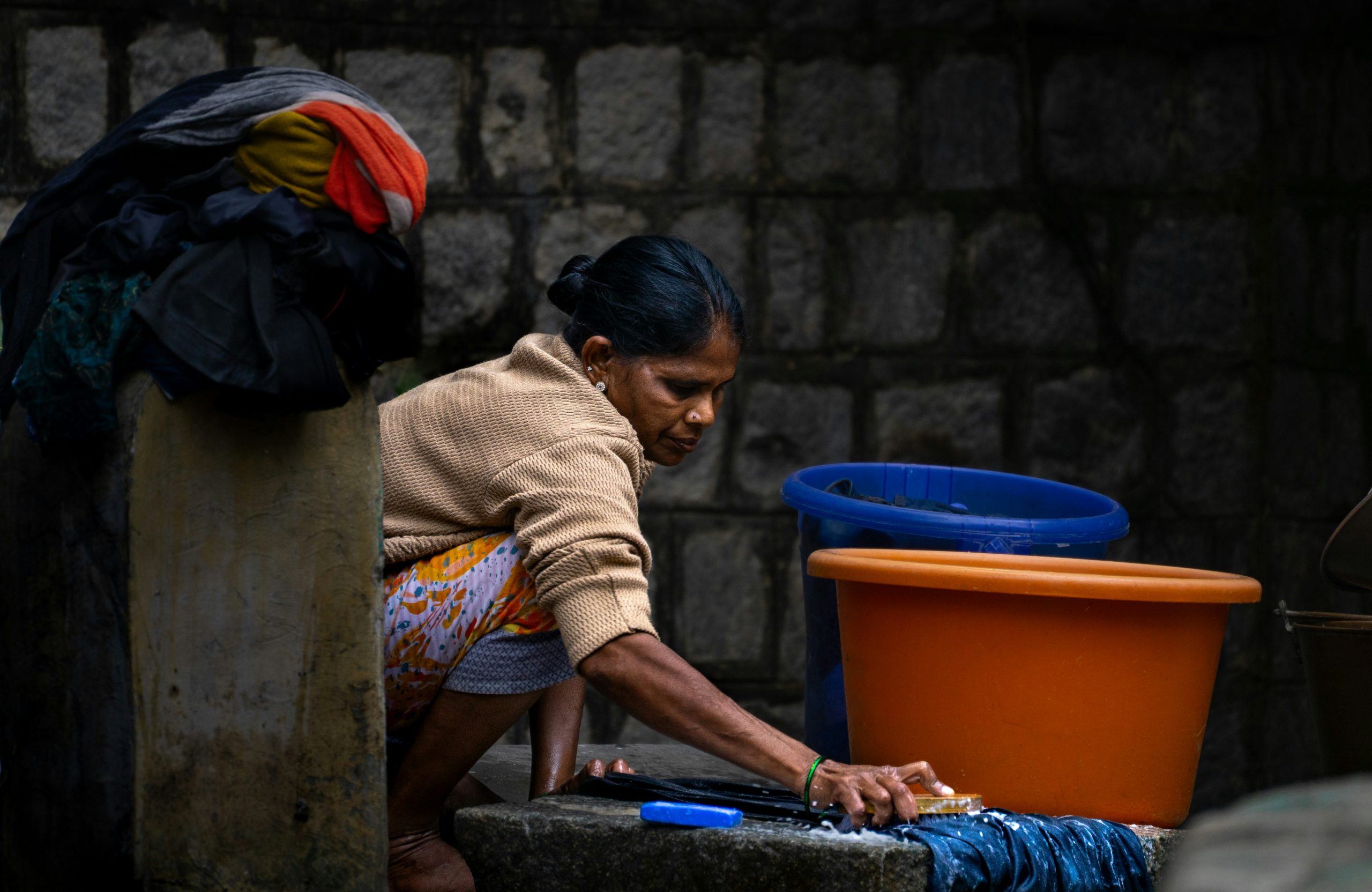
Under capitalism, these tasks are often treated as “natural” duties, especially for women, and are frequently unpaid. A classic example is the housewife who cooks, cleans, and cares for her husband and children, ensuring her husband can return to work each day. While the husband’s labour is paid and seen as “productive,” the housewife’s essential work remains invisible and unpaid.
Gender, Race, and the Burden of Care
Social reproduction has historically fallen disproportionately on women, especially within families where unpaid care work is expected. But it’s not just about gender — race and class play key roles too.
In many wealthier countries, much of the paid reproductive labour (like domestic work, childcare, or elder care) is done by migrant women, often from poorer or formerly colonised nations. These women leave their own families behind to care for the families of others, frequently for low wages and under precarious conditions. Sociologist Sara Farris calls this dynamic the “reproduction of the material conditions of social reproduction.” This idea is simple: today, in richer countries and among the middle classes, both partners work. They are working in the workplace, and are also doing the unpaid social reproduction work. But unlike the days of the family wage, when the husband would work, and the housewife would stay at home, both of them work and don’t have the time to do everything alone. Who is doing the social reproduction for them? Somebody needs to take care of the kids and elderly, often this is a migrant nanny or care-worker. In simple terms, wealthy nations depend on poorer nations to supply cheap, exploitable labour to maintain their own social structures.
Indeed, social reproduction isn’t just a local issue — it’s global. The structures of racial capitalism and colonialism have shaped how reproductive labour is organised worldwide. Take the example of cotton in the 19th century. A housewife in Britain might have been engaging in social reproduction by making her husband’s bed with a clean cotton sheet. But that cotton was likely picked by enslaved people in the American South. In this way, the domestic sphere in the imperial core was deeply connected to violent exploitation on the colonial periphery.
This pattern persists today. Migrant women from poorer countries often travel to wealthier nations to work as nannies, cleaners, or caregivers. Meanwhile, their own families back home may struggle without their presence, highlighting how social reproduction is fractured and outsourced on a global scale. This shows how racial capitalism — the intertwining of capitalism and racial hierarchies — sustains social reproduction. The global flow of care work reflects deep inequalities, where the burden of reproductive labour is pushed onto the most marginalised groups.
What Does Social Reproduction Include?
At its core, social reproduction is about sustaining life and ensuring societies continue from one generation to the next. It can be broken down into three key areas:
- Generational reproduction — Caring for children and the elderly to ensure the continuity of society.
- Reproduction of the labourer — Providing food, rest, care, and emotional support so that workers can return to work each day, and preparing the next generation of workers.
- Societal reproduction — Maintaining the broader social fabric — the relationships, cultural practices, and institutions that keep society functioning.
As Johanna Brenner and Barbara Laslett put it, social reproduction involves:
“Activities and attitudes, behaviours and emotions, and responsibilities and relationships directly involved in maintaining life, on a daily basis and intergenerationally… It includes how food, clothing, and shelter are made available, how children are socialised, how the elderly and infirm are cared for, and how sexuality is socially constructed.” Social reproduction has existed in all societies — from hunter-gatherer groups to feudal kingdoms — but under capitalism, it has taken on its own form.
Social Reproduction Under Capitalism
Capitalism appears to be based on “free” labour contracts — where workers sell their labour in exchange for wages. But beneath this surface is an entire system of unpaid or underpaid labour that capitalism depends on but refuses to properly value. As feminist theorist Nancy Fraser explains, capitalism relies on “activities of provisioning, caregiving, and interaction that produce and maintain social bonds, although it accords them no monetised value and treats them as if they were free.”
In other words, while capitalism depends on care work, it refuses to pay for it. This work is often gendered (expected of women), racialised (outsourced to migrant or racialised women), and hidden from view. This system also relies on nature as a free resource — extracting raw materials and using ecosystems as dumping grounds for waste — without considering the environmental costs. The result is a system that constantly exploits both people and planet while giving nothing back.
Crisis in Social Reproduction
Capitalism has a built-in contradiction: it relies on social reproduction but constantly undermines it. In its pursuit of profit, capitalism cuts funding for healthcare, education, and public services, forcing families — often women — to pick up the slack. This creates what scholars call a crisis of social reproduction — when the systems that sustain life start to break down.
Nancy Fraser says that this self-destructive tendency operates on the following logic:
- Capitalism needs workers, but it refuses to fully support the care work that makes workers possible.
- It relies on nature, but it over-extracts resources, leading to ecological collapse.
Historical examples show how this can have devastating effects. Under King Leopold’s brutal colonial rule of the Congo, the hyper-exploitation of Congolese workers for rubber led to a complete breakdown of local communities. As many as 10 million people died, not just from direct violence but also from the destruction of their social-reproductive systems.
Even in less extreme cases, the erosion of social reproduction has real consequences. The rise of precarious work, cuts to public services, and the decline of the “family wage” have made it harder for people to balance paid labour with the unpaid care work that society still demands.
Social Reproduction Today: Neoliberalism and the Global Care Chain
In recent decades, neoliberalism — with its focus on deregulation, privatisation, and cuts to public services — has deepened the crisis of social reproduction. This creates what scholars call the “global care chain” — a system where care work is passed along from one woman to another, often across borders. A migrant nanny in the U.S., for example, may care for someone else’s children while leaving her own children back home, cared for by relatives or hired help.
Understanding social reproduction challenges the narrow focus on waged labour as the only “productive” work. It forces us to see the hidden labour that keeps society running — and how systems of gender, race, and class shape who does that labour and under what conditions. It also highlights capitalism’s contradictions. A system that depends on care but refuses to support it is destined to face crises — both social and ecological. Recognising the importance of social reproduction isn’t just an academic exercise. It’s essential for imagining and building societies that truly value life, care, and community.
Sources
Bhattacharya, Tithi . “Introduction: Mapping Social Reproduction Theory.” Social Reproduction Theory Remapping Class, Recentering Oppression, by Tithi Bhattacharya , London, Pluto Press, pp. 1–21.
Fraser, Nancy . “Crisis of Care? On the Social-Reproductive Contradictions of Contemporary Capitalism .” Social Reproduction Theory Remapping Class, Recentering Oppression, by Tithi Bhattacharya , London, Pluto Press, pp. 21–37.
—. “Crisis of Care? On the Social-Reproductive Contradictions of Contemporary Capitalism .” Social Reproduction Theory Remapping Class, Recentering Oppression, by Tithi Bhattacharya , London, Pluto Press, pp. 21–37.
