
By DCC Team
The security-industrial complex refers to the network of relationships between governments, private corporations, and security agencies that profit from and sustain “security”. Security here means systems of surveillance, border control, and detention. This is related to the rise in global migration. It is a form of racist state control and the security-industrial complex has become central to how modern states manage populations—especially those considered undesirable or surplus.
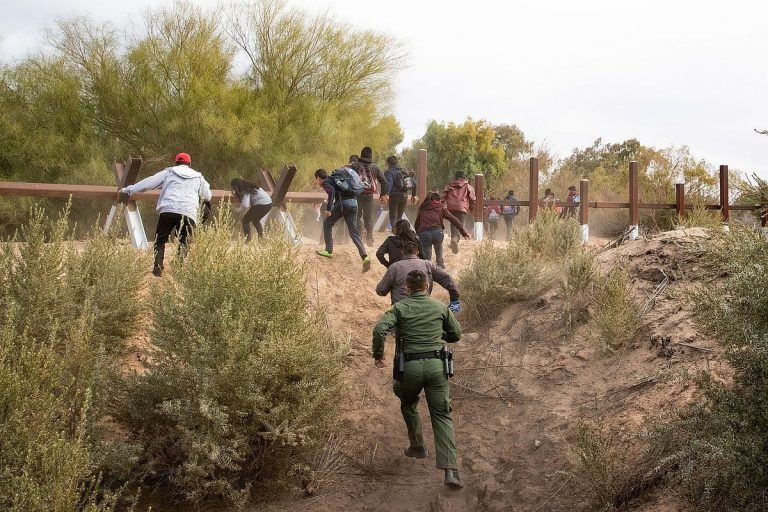
Under the security industrial complex, the management of borders, migration, and social control are turned into profitable industries that companies can invest in. The State usually does a bid, and then corporations go on and build walls, run detention centres, and develop surveillance technologies. In the era of right-wing populism and racism, states justify expanding these systems under the guise of security and border management to placate to the far-right. This dynamic has created a vast, transnational market where human mobility, especially of marginalised populations, is treated as a problem to be contained and controlled—often through violent and exclusionary means. Sometimes this violence is even broadcasted for public consumption on TV.
Securitisation and the Expansion of Surveillance
A key driver of the security-industrial complex is securitisation—the process by which issues like migration, population movement, and labour mobility are framed as security concerns. This framing does not necessarily portray migrants or displaced populations as immediate threats to national security in a traditional sense (such as military threats) but rather as potential disruptors to social, economic, or political order. Through securitisation, states justify extraordinary measures such as militarised borders, mass detention, and widespread surveillance.
This process has fueled the growth of surveillance systems that extend far beyond border checkpoints. Technologies like biometric data collection (fingerprints, facial recognition), drone monitoring, and extensive databases now form a core part of border control regimes. For instance, migrants and refugees are often required to submit biometric data as part of asylum processes, while governments invest in sophisticated systems to track and monitor their movements.
Private corporations play a central role in the expansion of surveillance. Companies like G4S have built profitable business models around immigration detention, prisoner escort services, and border security. As of February 2025, G4S has not publicly released its profit figures for the fiscal year 2024. However, projections indicate that the company’s revenue for 2024 is approximately £8.06 billion, reflecting a 3.36% increase from the £7.8 billion reported in 2023. A significant portion is derived from security technologies and border management services. This privatisation of border security has blurred the lines between state responsibility and corporate profit, creating incentives to expand surveillance and detention infrastructures.
The spread of these surveillance practices is not limited to border zones. The techniques and technologies developed for border control increasingly permeate everyday life. Facial recognition systems in public spaces, data tracking of mobile devices, and predictive policing algorithms are now common features in many urban environments. These practices disproportionately target racialised and marginalised communities, extending the logics of border control into domestic spaces and reinforcing existing structures of inequality.
Surplus Populations and the Logic of Control
The security-industrial complex is deeply tied to the management of what scholars term surplus populations—groups of people deemed economically unnecessary or politically undesirable within global capitalist systems. Surplus populations are often those displaced by war, environmental disasters, or economic exploitation, who find themselves excluded from formal labor markets and legal protections.
These populations become the primary targets of border control and surveillance systems. Lacking recognised legal status, many migrants are forced into informal economies or confined within refugee camps and detention centers. These spaces serve as forms of warehousing, where surplus populations are held in limbo, unable to move forward or integrate into society, but also unable to return to their places of origin.
The existence of surplus populations is not incidental to global capitalism but is a structural feature of it. As capitalist economies expand, they often displace communities through land grabs, resource extraction, or conflict, creating waves of displacement. Yet these same systems limit the ability of displaced populations to move freely or seek safety, using borders as tools to control and contain them.
In this context, border regimes act as filters, sorting populations based on perceived economic value and desirability. People with capital or skills deemed useful to receiving countries are often granted mobility, while others are blocked, detained, or pushed into precarious forms of existence. This sorting reinforces racialised hierarchies, as the people most often trapped in these systems are from the Global South or marginalised racial and ethnic groups.
The Business of Security: Privatization and Profit
One of the most significant features of the security-industrial complex is the privatisation of border control and surveillance. States increasingly outsource the construction, operation, and management of security infrastructures to private corporations, creating a profitable market around migration control.
This includes:
- Detention centers and prisons run by private companies.
- Biometric and surveillance technologies developed for tracking migrants and refugees.
- Private security forces contracted to patrol borders and transport detainees.
- Data management systems that catalog, monitor, and process migrant populations.
The profit motive embedded in this system creates perverse incentives. Companies stand to gain from the expansion of detention facilities, the extension of border walls, and the implementation of stricter surveillance measures. Contracts are often tied to the number of detainees held or deported, leading to situations where migrants become commodities within a vast, profit-driven infrastructure.
This privatisation also distances states from the direct responsibility of managing these systems. When abuses occur within detention centres or through deportation practices, governments can deflect blame onto private contractors, even though they design and fund the broader system.
Global Networks and Cooperative Bordering
The reach of the security-industrial complex extends beyond national borders. Increasingly, states collaborate to externalise border controls, pushing the management of migration further away from their own territories through cooperative bordering agreements.
For example:
- The EU-Turkey deal (2016) effectively outsourced the management of Syrian refugees to Turkey, providing financial incentives for Turkey to prevent migrants from reaching European soil.
- Australia has used offshore detention centers in Nauru and Papua New Guinea to process asylum seekers, keeping them away from the mainland and outside the purview of domestic law.
- North African states like Morocco have received funding and political support from the European Union to police migration routes, acting as a buffer zone that prevents migrants from reaching Europe.
- The Rapid Support Forces, accused of genocide in Sudan, once benefitted from EU money through the Khartoum Process.
These agreements extend the reach of the security-industrial complex into countries with weaker legal protections for migrants, creating layers of control that make it increasingly difficult for displaced populations to find safety. The result is a global system that contains, detains, and redirects surplus populations, often at great human cost.
Conclusion
The security-industrial complex is a powerful, transnational system that profits from the control, surveillance, and exclusion of marginalised populations. It transforms borders into militarised zones, turns human movement into a security issue, and treats displaced and racialised people as problems to be managed rather than individuals deserving rights and dignity.
Rooted in the logics of racial capitalism, the complex not only sustains global inequalities but actively deepens them. It creates a world where the mobility of some is facilitated and celebrated, while the movement of others is criminalised, contained, and punished. Understanding the security-industrial complex means recognising how state power, corporate profit, and racialised control intersect to manage human life on a global scale.
Sources
Sources;
Bhattacharyya, Gargi. Rethinking Racial Capitalism: Questions of Reproduction and Survival. London, Rowman & Littlefield Intl, 2018.
Jones, Chris. “Market Forces: The Development of the EU Security-Industrial Complex | Transnational Institute.” Transnational Institute, 25 Aug. 2017, www.tni.org/en/publication/market-forces-the-development-of-the-eu-security-industrial-complex. Accessed 27 Feb. 2025.
StateWatch. “The European Security Industrial Complex.” Statewatch.org, 2021, www.statewatch.org/observatories/the-european-security-industrial-complex/overview/. Accessed 27 Feb. 2025.
